-
- Bespoke Tailoring: Created 100% custom from the ground up for the individual client using an original, hand-drafted paper pattern. Built on a skilled cutter’s workbench with floating canvas construction and multiple basted fittings.
- Made-to-Measure (MTM): Uses a pre-existing standard block pattern modified by computer software. Assembled in a mass-production factory setting rather than on an artisan’s workbench.
- The Result: True bespoke adapts seamlessly to asymmetrical shoulders, posture, and body changes over decades, while MTM offers basic fit adjustments constrained by a factory template.
Understanding the Custom Suiting Spectrum
In modern menswear, terms like “custom,” “made-to-measure,” and “bespoke” are frequently used interchangeably. However, behind the curtain of luxury tailoring lies a fundamental distinction between artisanal handcraft and industrial manufacturing.
At Oshea and Company Artisan Tailors, true bespoke suiting is defined not by marketing language, but by how the garment originates on the cutting table.
1. Pattern Creation: Paper Blueprint vs. Computer Block
The defining line between bespoke and made-to-measure begins before a single blade touches cloth:
- Made-to-Measure (MTM): When you order a made-to-measure suit, a fitter takes standard measurements and inputs them into a computer. The software adjusts a pre-existing “block pattern” (a standardized S/M/L template). While the shoulder width or trouser length may be modified, the underlying architecture remains fixed to the factory template.
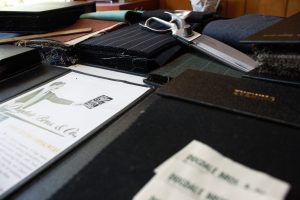
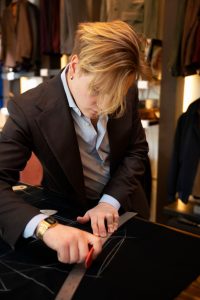
- True Bespoke: Bespoke suiting begins when a skilled cutter takes a pencil to paper and drafts an individual, one-of-a-kind pattern tailored exclusively to your unique posture, shoulder slope, and silhouette. This pattern is wholly yours and is continuously refined throughout your lifetime.
2. Workshop vs. Factory Assembly
Where and how your suit is constructed dictates its shape, breathability, and lifespan:
- Made-to-Measure Production: MTM garments are commissioned individually but sent off to regional or overseas factories. They are assembled on automated production lines, often utilizing fused (glued) interlinings or machine-stitched canvasing to cut down labor hours.
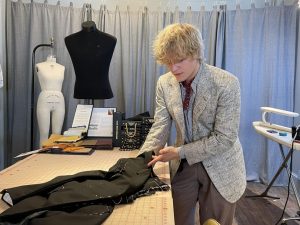
- Bespoke Benchcraft: A bespoke suit is constructed on a single cutter’s workbench. The fabric is cut by hand by a cutter, while coat makers and trouser makers assemble the chest piece, padded lapels, and hand-felled seams using time-honored artisanal techniques identical to London’s Savile Row.
Frequently Asked Questions
Q: Is a made-to-measure suit considered bespoke?
A: No. Made-to-measure modifies a pre-existing factory template. True bespoke requires drafting a completely individual paper pattern from scratch and constructing the suit by hand on an artisan workbench.
Q: Why are bespoke suits fitted multiple times?
A: Bespoke garments utilize basted fittings—where the suit is loosely stitched together with temporary thread—allowing the tailor to adjust the floating canvas and paper pattern directly on your body before final hand-stitching.